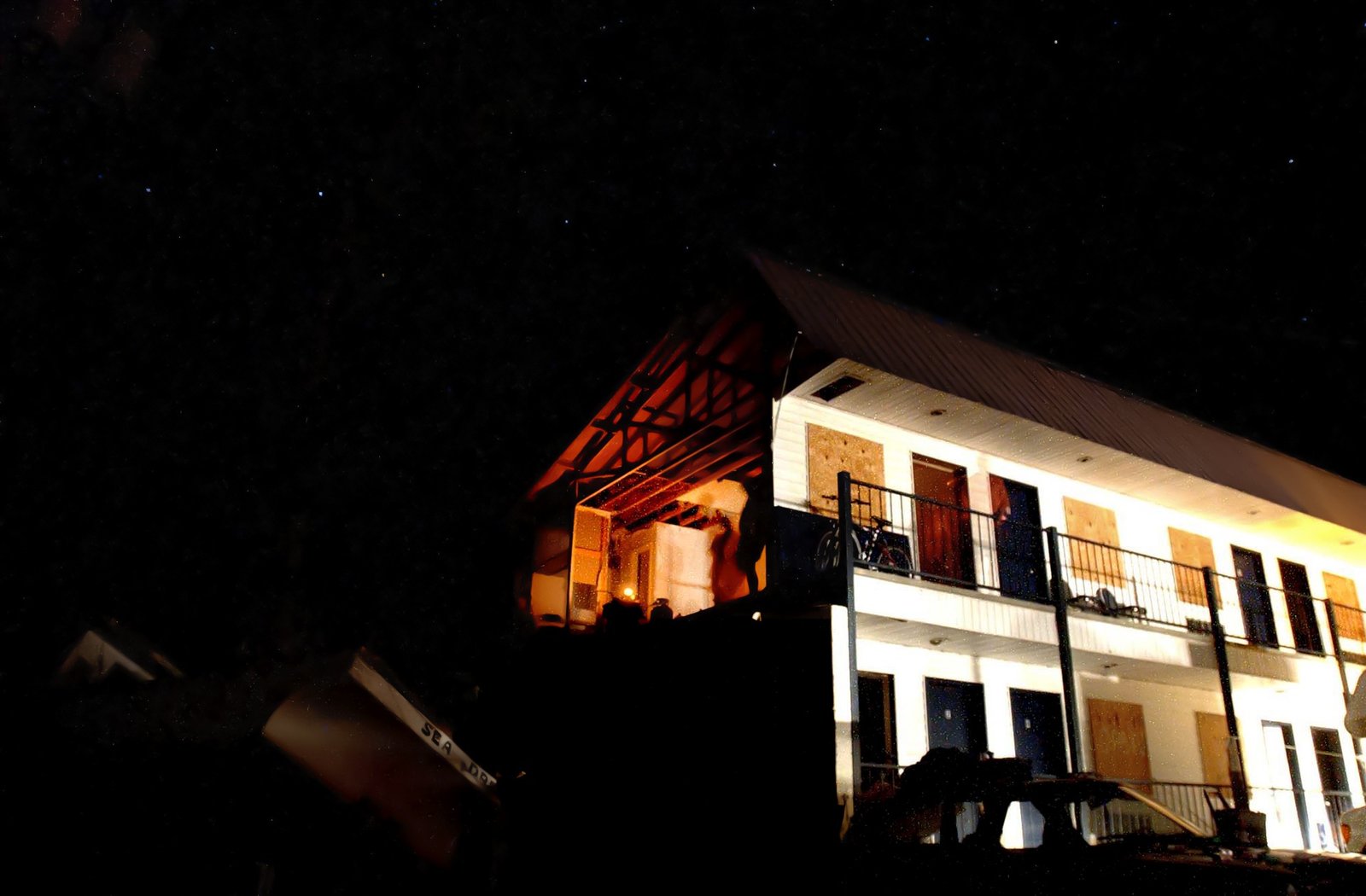
Hurricane Katrina struck the Mississippi Gulf Coast August 29, 2005, slamming residents with 120 mile-an-hour winds and a 30-foot storm surge. JoAnna Dubreuil and her two sons, Jimmy and Eric Goodman, along with their dog, six puppies, and a cat, rode out the storm at the Waffles Motel in Bay St. Louis, Mississippi, just off of Interstate 10 where Dubreuil worked. Its location was further inland from the low-lying area where the she and her sons lived, and had proven to be a safe haven from past storms. They watched as the water surged in from the bay, rose past the second floor, and forced them to retreat into the attic crawl space. While there, a large, rogue shrimp boat crashed into the southern wall of the motel, tearing it open.
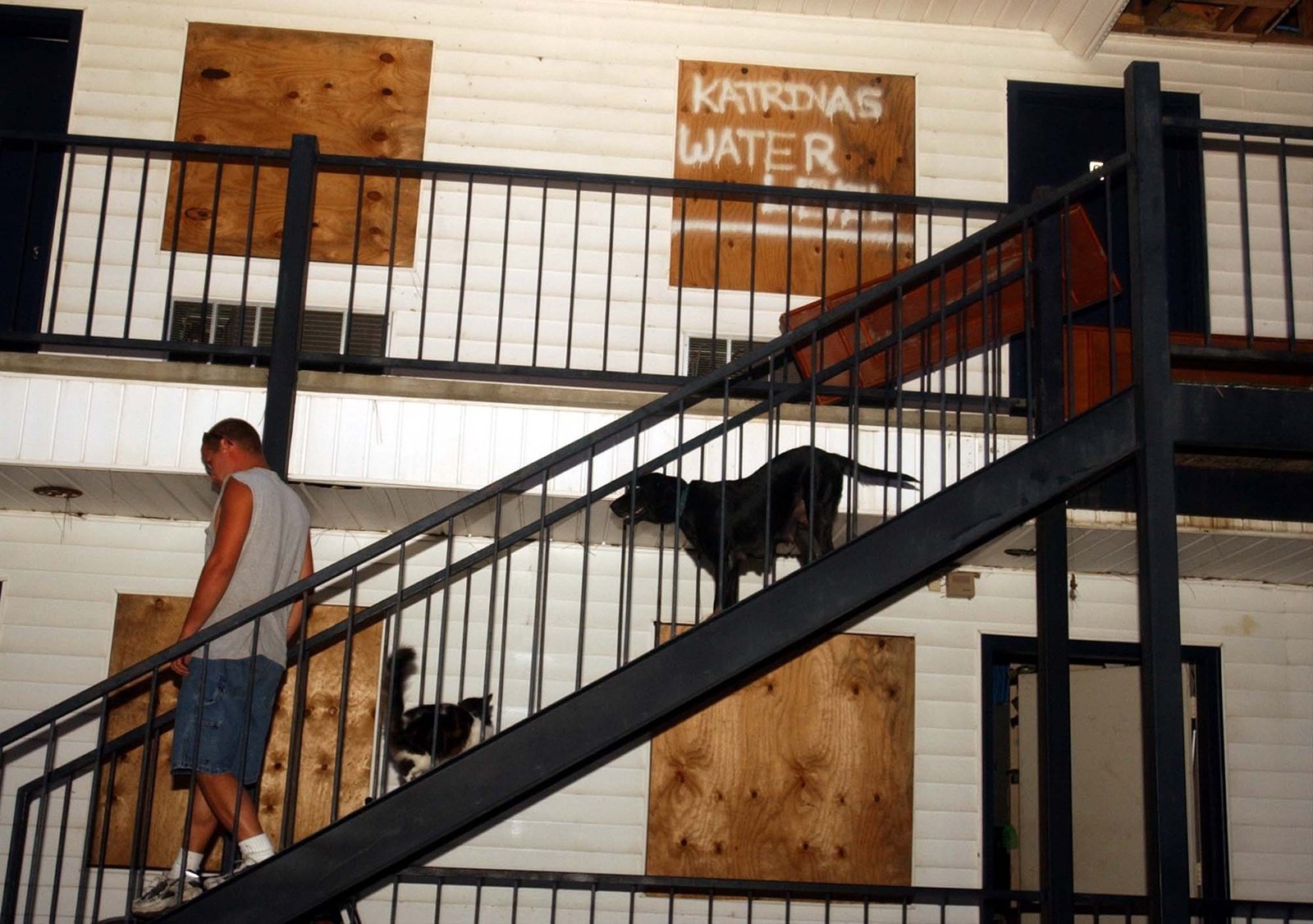
Eric Goodman, followed by his cat and dog, descends the staircase at Waffles Motel, where boards marking Katrina’s storm surge height serve as a reminder of their survival just days before.
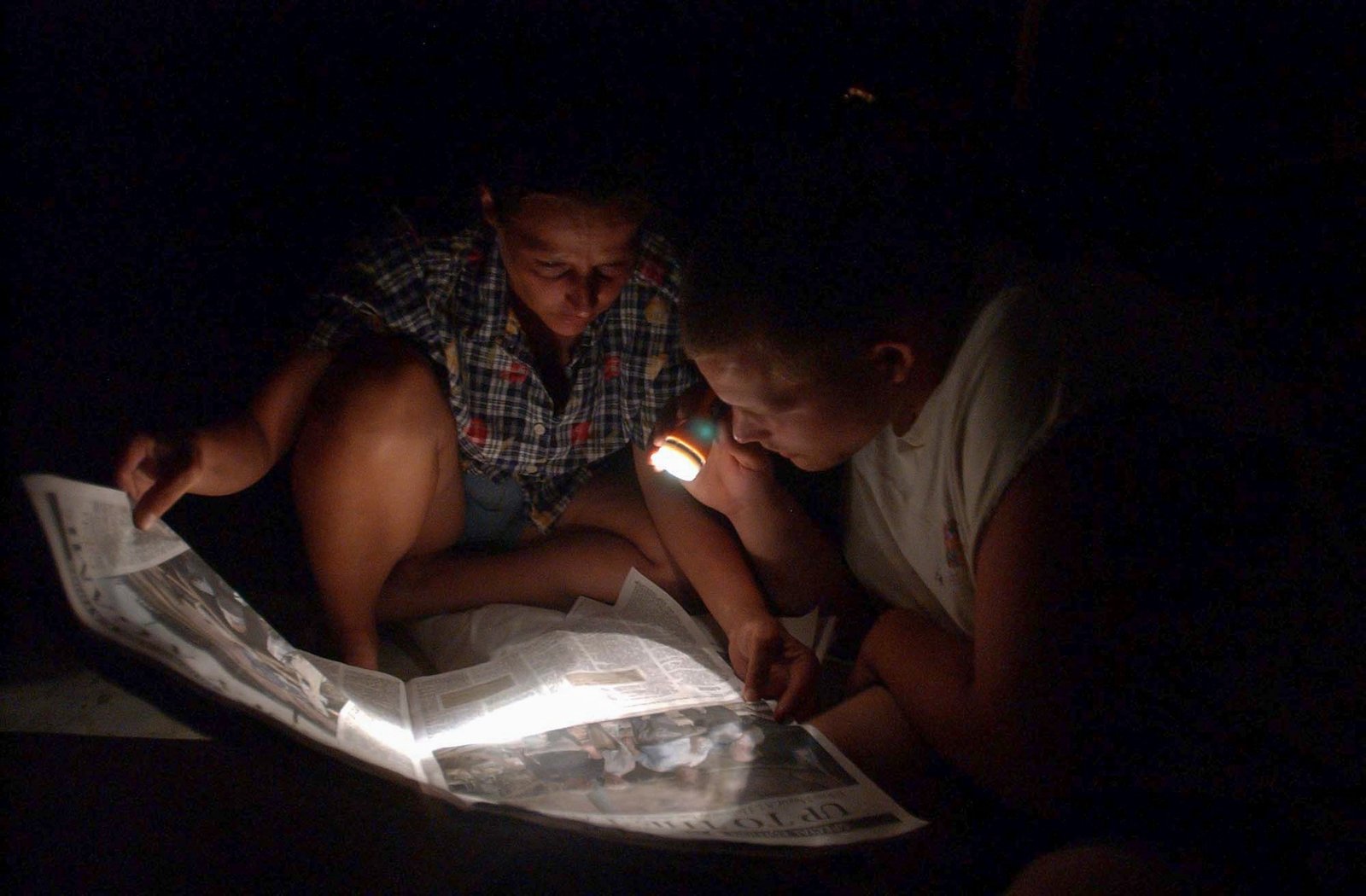
With the electricity is still out, JoAnna Dubreuil and her son Jimmy Goodman look over a local newspaper in Bay St. Louis the night of Sept 3, 2005, just days after Hurricane Katrina made landfall. It was the first time seeing any coverage since the storm hit their tiny town in southern Mississippi.
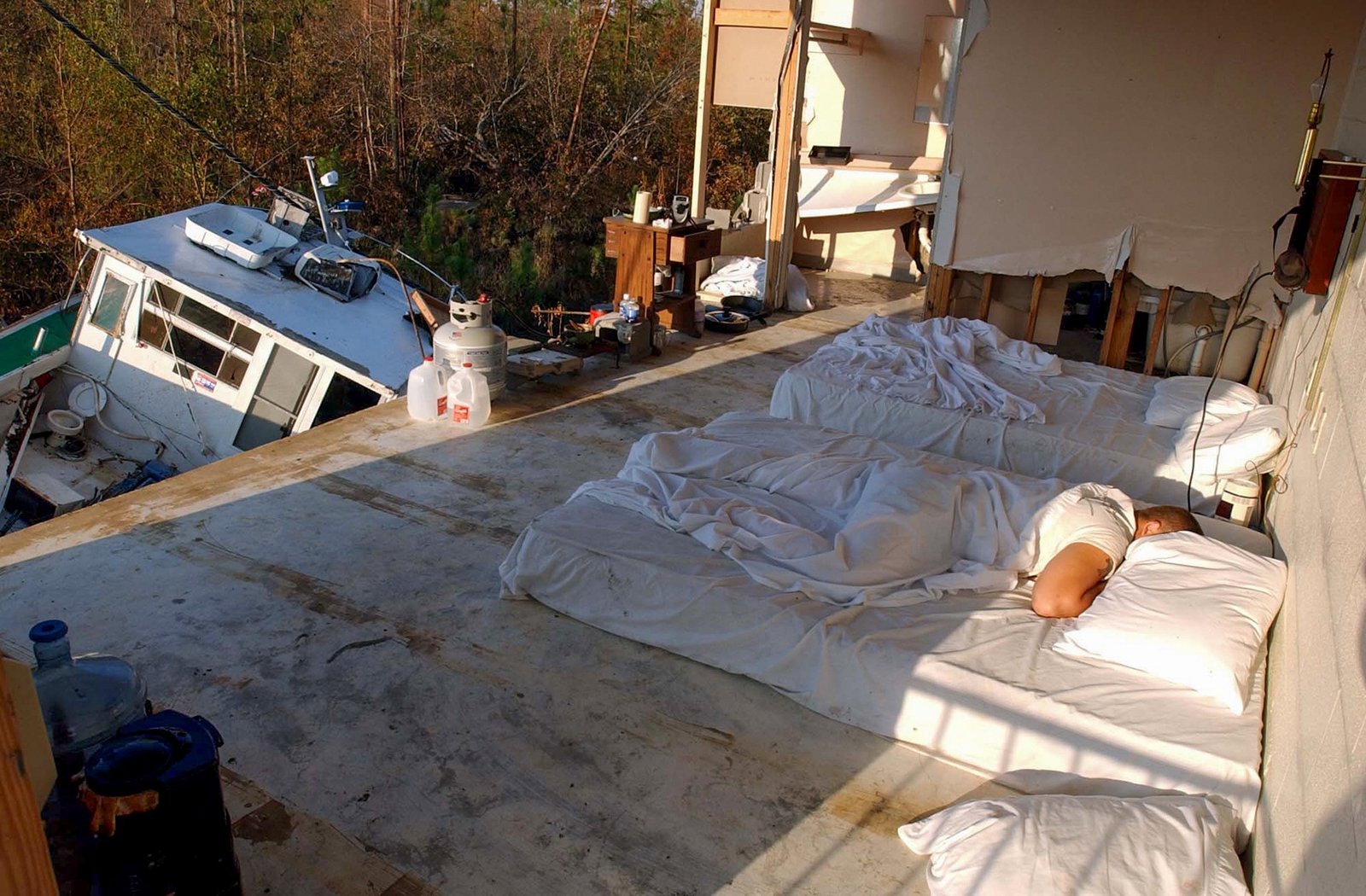
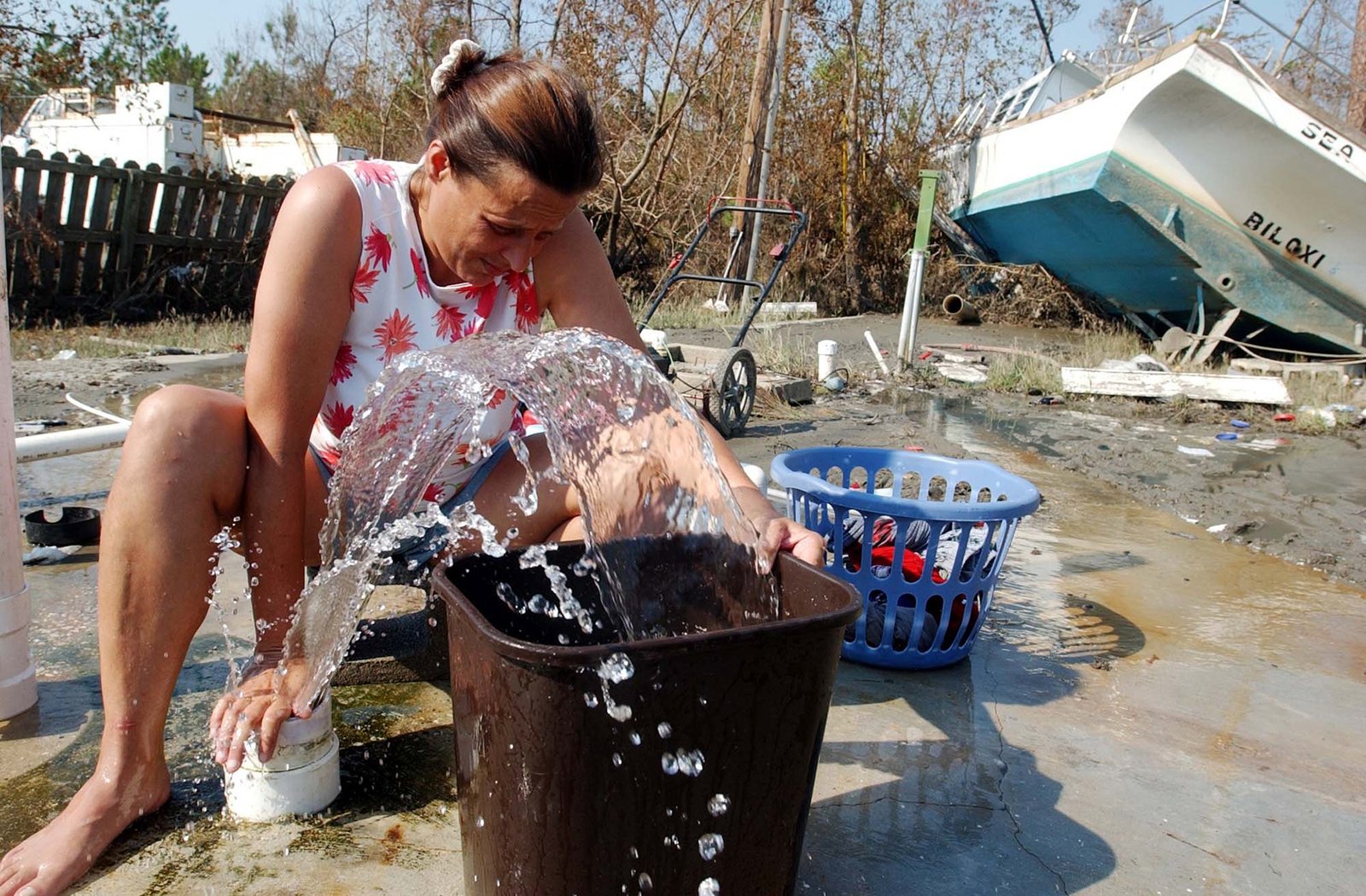
Fearing their low-lying homes were destroyed and having no way to travel to them to check, the family stayed at the motel, clearing out the room that was opened to the outside — the other mildew-laden rooms, uninhabitable — and making do with what was available. An artesian well on the property provided a place to wash sheets and clothing, but not drinking water.
Jimmy Goodman sleeps on the one of two of the driest mattresses they could find at the motel, which they placed in the upstairs room open to the outdoors.
JoAnna Dubreuil fills a bucket with water from the artisan well on the grounds of the Waffles Motel, to launder their clothes.
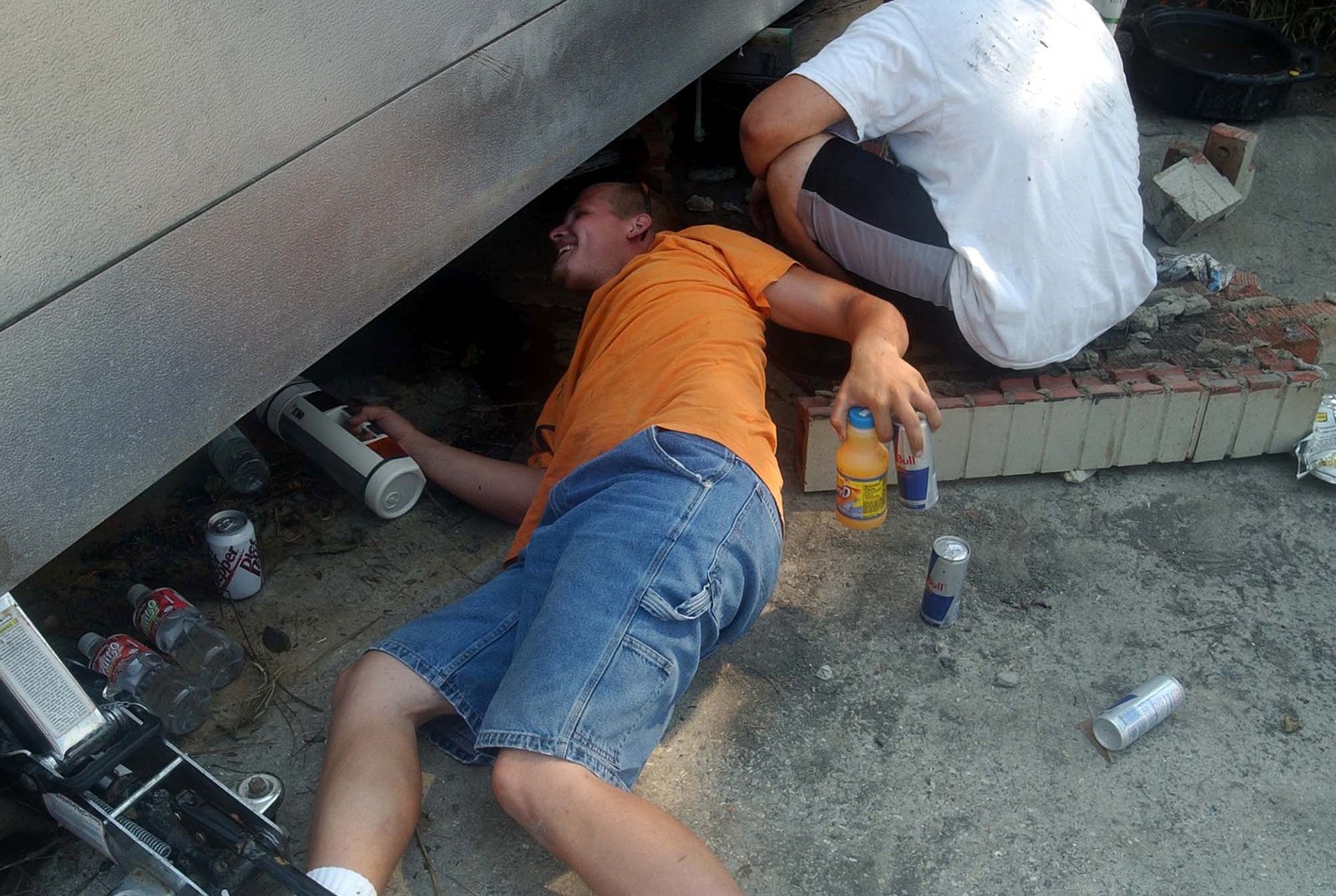
Eric Goodman searches underneath the overturned cooler of the Waffles Motel’s diner in search of Yahoo chocolate drinks.
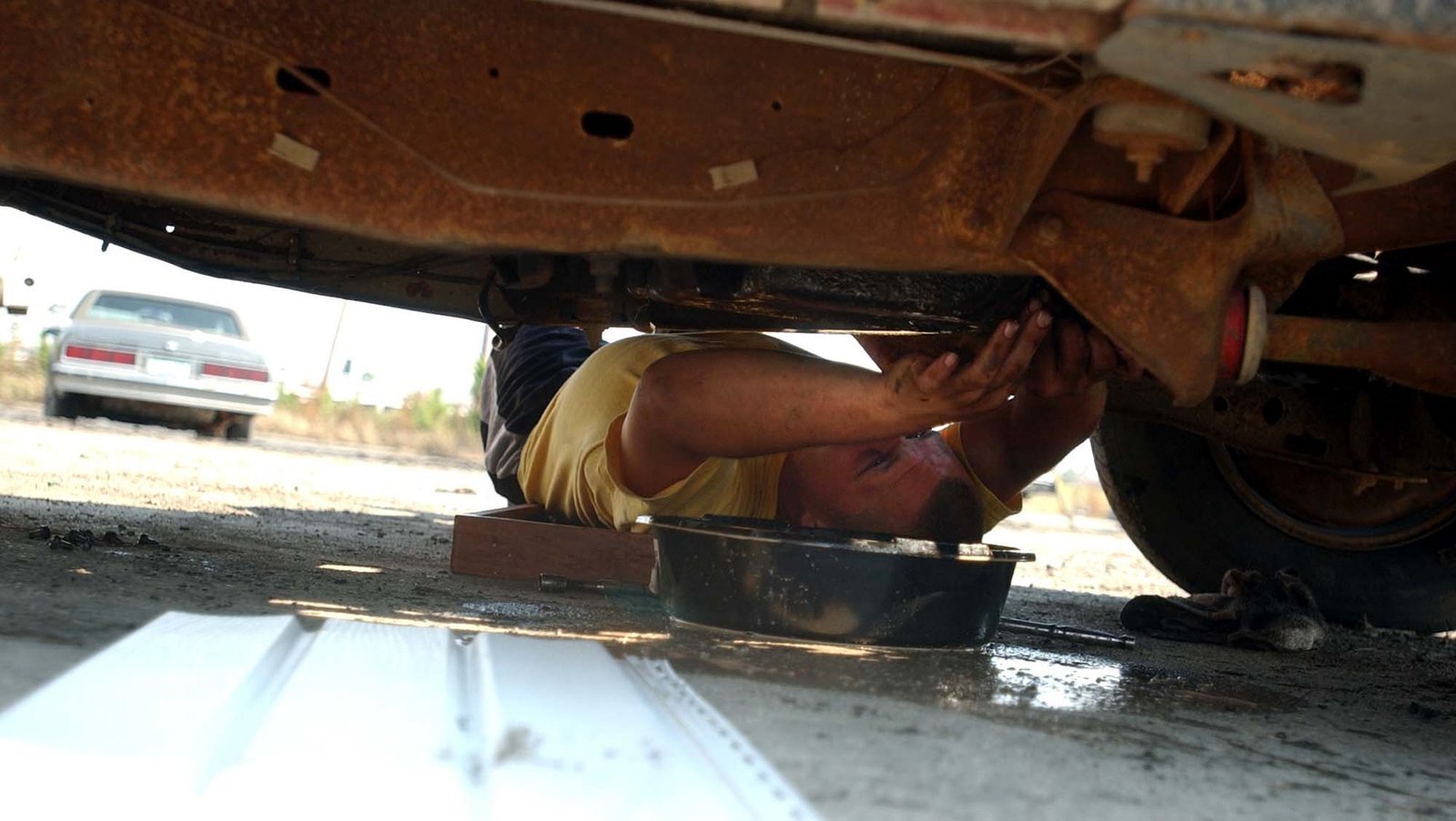
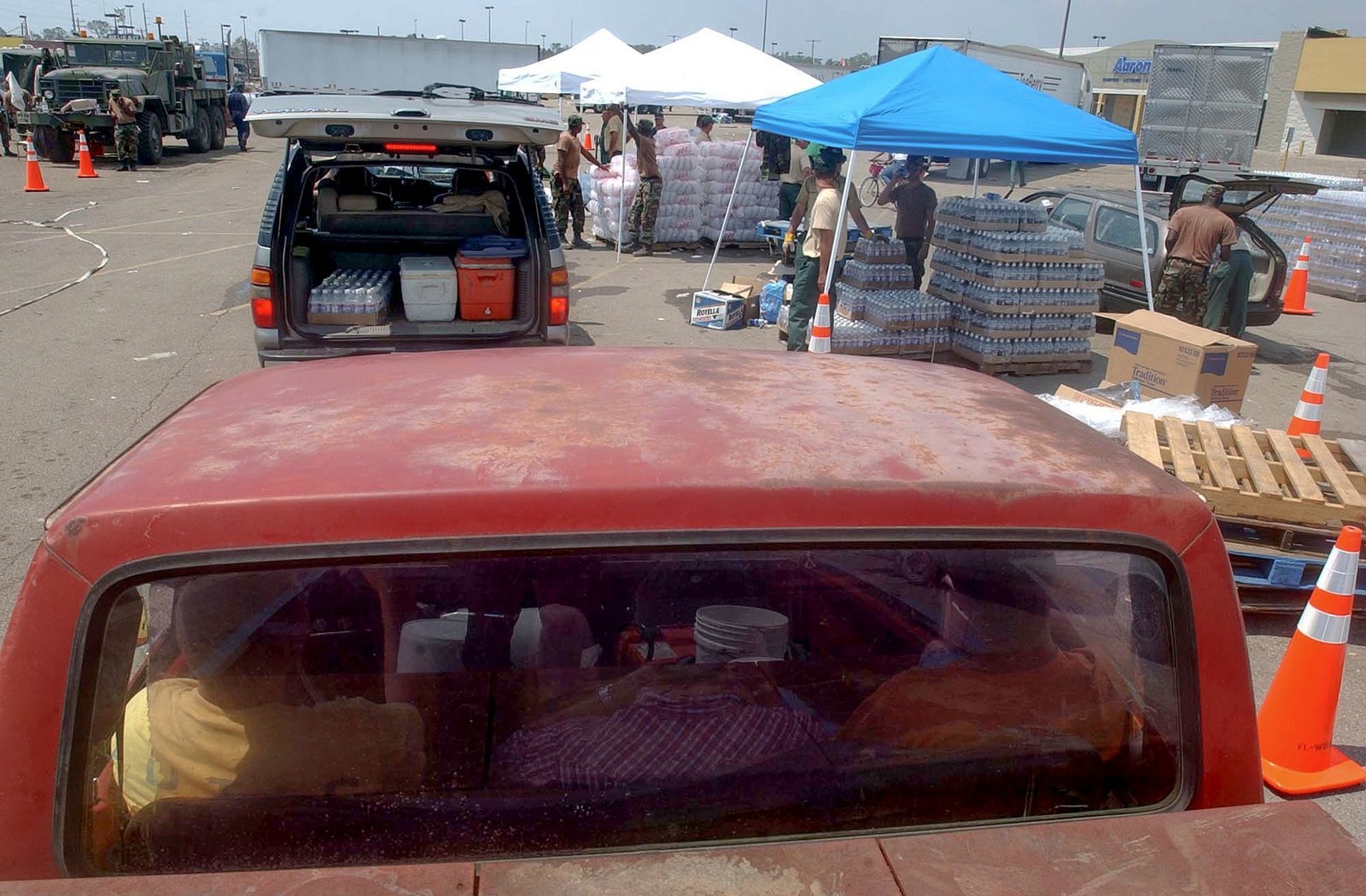
An aide station a few miles away offered water and ice to those affected by the storm. Their truck, its transmission filled with saltwater, needed work before it could be driven again for supplies or to go to check on the condition of their homes.
Jimmy Goodman tries to get his truck running after being flooded during Hurricane Katrina, its transmission full of water.
One he gets the truck running, Jimmy Goodman and his bother, Eric wait in line for water and ice at an aid station in Waveland, Miss, a few miles from the motel.
Eric Goodman, 21 left, and his brother Jimmy, 23, right, eat their morning meals. Eric heated his over a propane stove, while Jimmy adds water to an instant tea that came with a Meals Ready to Eat (MRE) packet.
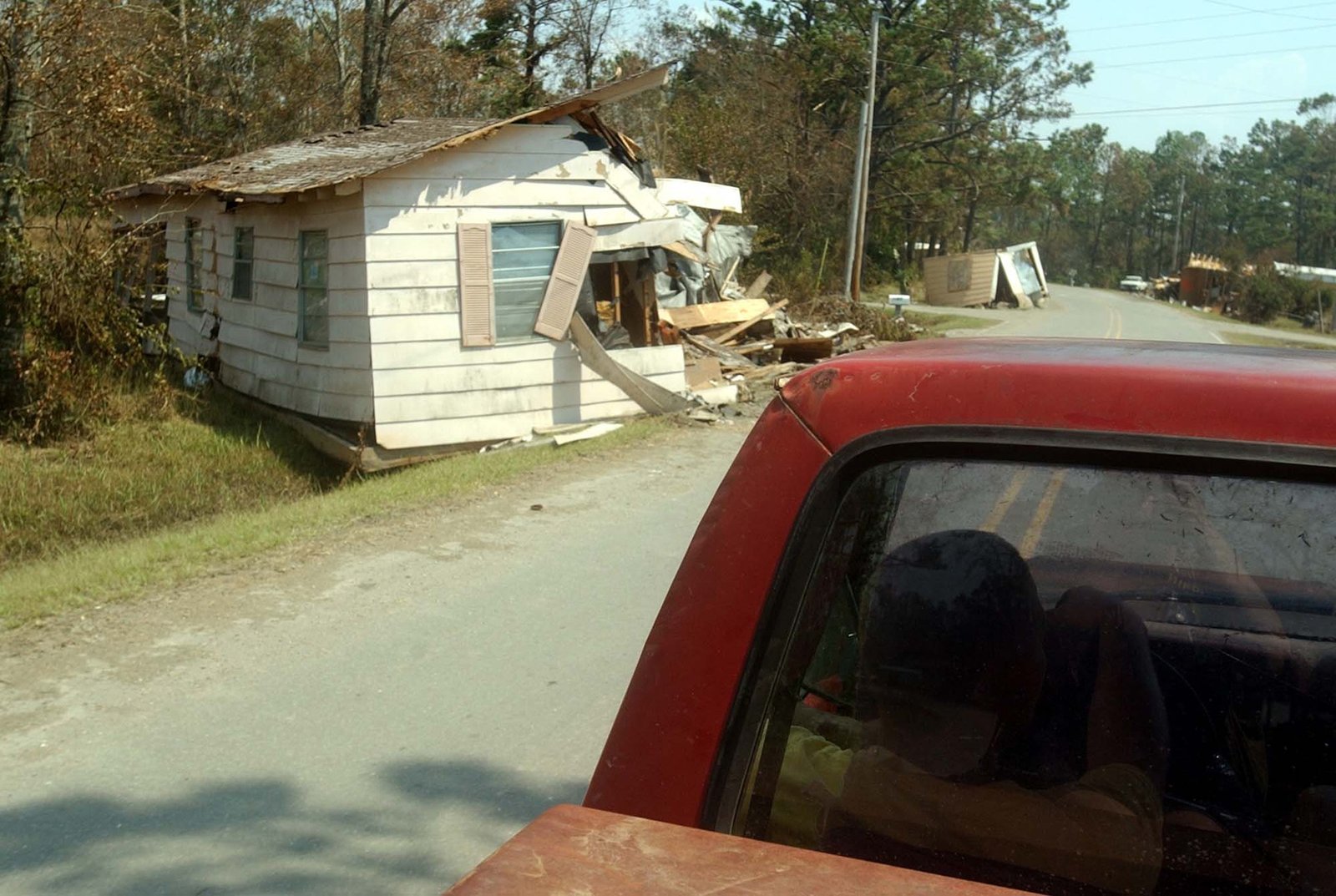
Jimmy Goodman drives down the road of the Lakeshore, Miss. community that he called home to see the condition of the home he shared with his brother.
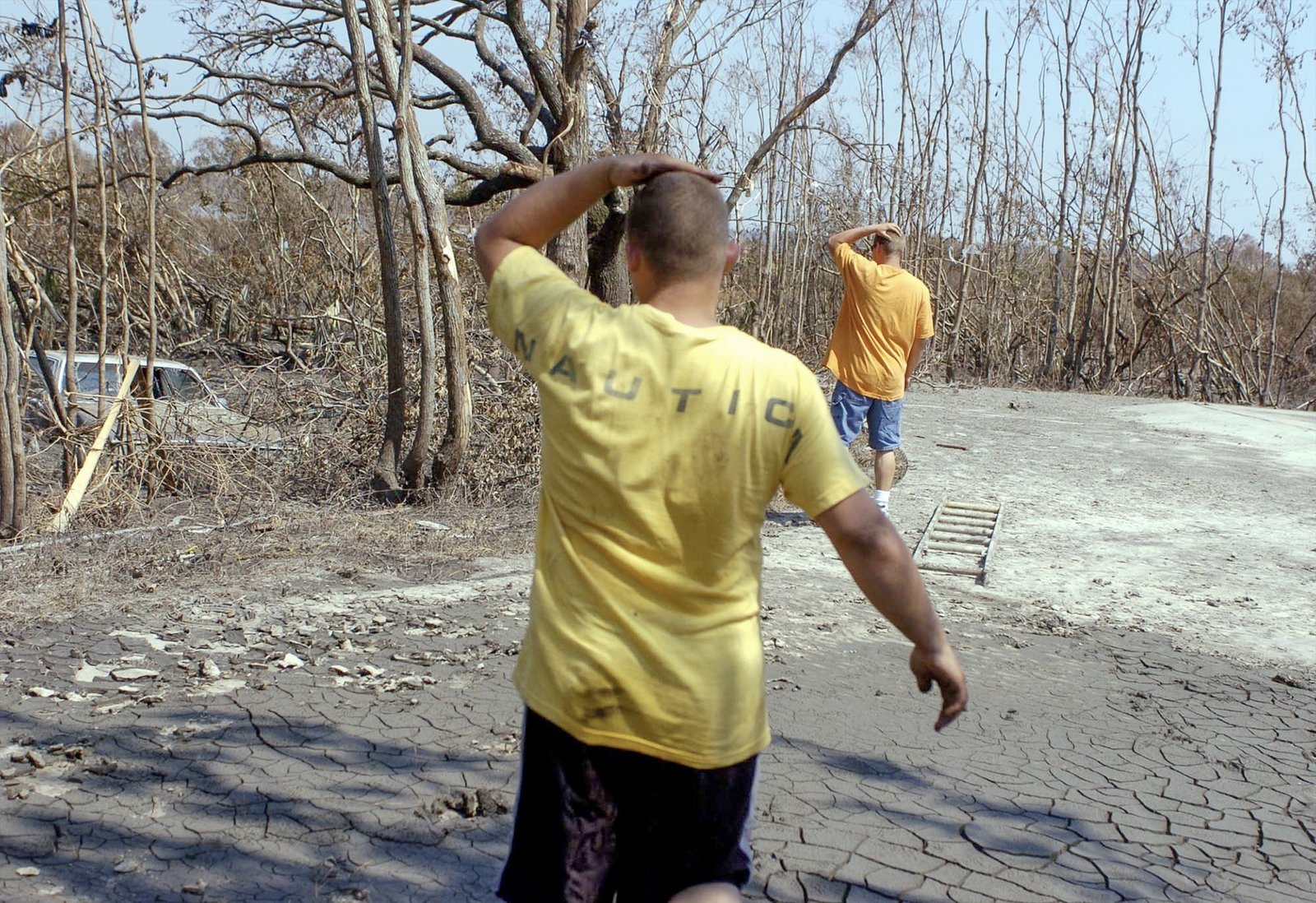
Brothers Jimmy and Eric Goodman react as they find Eric’s prized 1985 Buick LeSabre buried in muck. Hurricane Katrina destroyed their home, leaving little else but a frame.
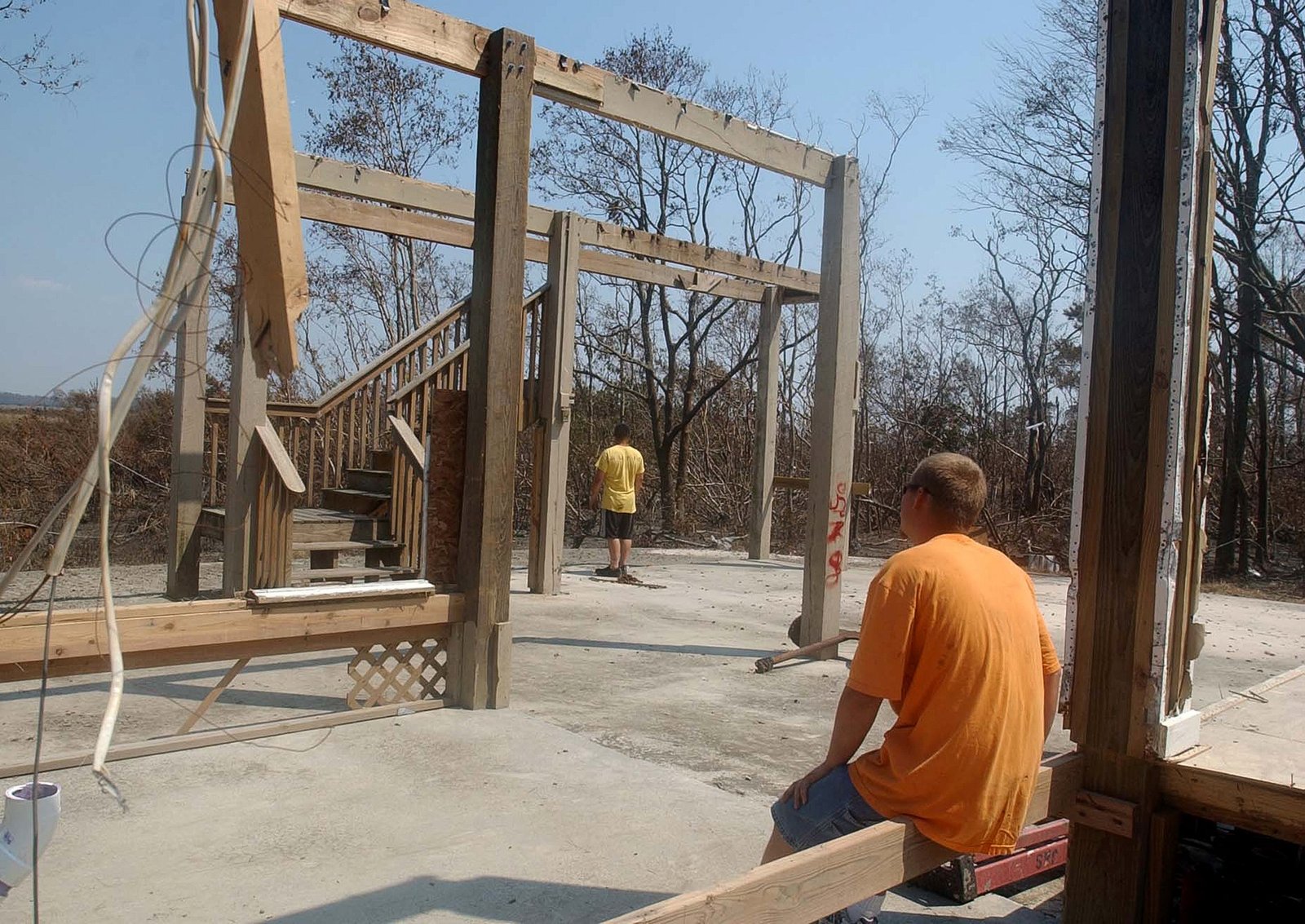
Seeing what is left of the home they shared, Brothers Jimmy and Eric Goodman inspect what is left of their Lakeshore, Miss. home for the first time.
Family photos brought to the motel dry on several of the Waffles Motel’s mattresses, where she and her family rode out Hurricane Katrina.